Manual.ly Logo

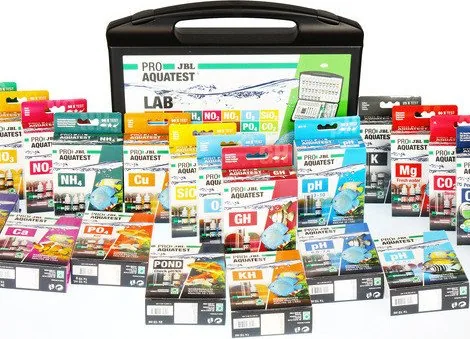
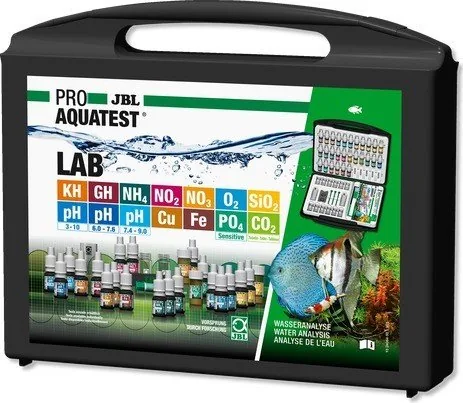
JBL Aquaristic ProAquaTest Lab Sayong-Seolmyeongseo

0.0 · 0 평점

PDF 설명서 · 65 페이지

한국어

M: QW-35-FL
페이지

/ 65

Loading...
20bbaef5bdec311f8d8e156c4e1fe9d6e449 page 9
16 17
deciency. Iron and some other trace elements are only sta-
ble in water for a limited time, even if they are bound to so-
called chelators, as is usual in modern fertilisers. In addition
any tap water added is usually iron-free. Therefore, the iron
content needs to be monitored regularly with this test and re-
plenished if necessary. Cncentrations as low as 0.1–0.2 mg/l
are sufcient for good plant growth. In very densely planted
aquariums, values of up to 0.6 mg/l can also be useful. In
marine water, values of up to 0.05 mg/l are recommended.
Procedure:
1. Rinse both test vials several times with the water to be
tested.
2. Use the enclosed syringe to ll each of the test vials with
5 ml of sample water.
3. Add 5 drops of Fe reagent to one of the two test vials and
mix by swirling. Allow to stand for 10 minutes until the
colour has developed completely.
4. Place both test vials in the grey comparator block: Place
the vial with added reagent at the smooth end and the
vial with untreated sample water (blank sample) at the
notched end of the comparator block.
5. Place the comparator block with the two test vials on the
colour chart in such a way that the notch points to the
values and move it on the colour chart until the colour of
the sample mixed with reagents corresponds as closely
as possible to the colour under the blank sample.
6. Read the iron content in the notch of the comparator.
Note:If you decide to use the JBL PRO AQUATEST NH
4
at
the same time, make sure you don’t mix up the measuring
vessels of either set. Traces of the JBL PRO AQUATEST
NH
4
left inside the measuring vessel may result in too high
readings in the iron test.
Correcting deviating values:
Too low: Fertilise with ferrous fertilisers from the JBL ferti-
liser range (e.g. JBL Ferropol).
Too high: Carry out the corresponding partial water change.
JBL PRO AQUATEST K
Features: JBL PRO AQUATEST K is an easy-to-use turbid-
ity test for the routine monitoring of the potassium content in
fresh and marine water.
Why test? Potassium is one of the macroelements which is
very effectively absorbed within a few hours and temporarily
stored by plants in fresh water. Growing plants require more
potassium compared to other elements. As a result, potas-
sium concentrations can drop to a minimum range, causing
plant growth to stagnate, even if the aquarium water is ferti-
lised regularly. Potassium deciency initially leads to chloro-
tic spots on the edges of the leaf, which gradually increase
and then turn into grey-brown necroses. The leaves may
crinkle or curl. In Central European tap water, potassium is
usually a decient element compared to in natural biotopes
and this especially applies to calcium and magnesium con-
centrations. For good plant growth, the potassium content
needs to be at around 10 mg/l, in aquariums with high il-
lumination (e.g. in so-called scapes) up to 30 mg/l can be
useful. Higher potassium values in aquarium water encour-
age the growth of green thread algae. Potassium is present
in seawater in concentrations of about 380–400 mg/l, but is
only consumed in small quantities. Excessively high potas-
sium contents can be dangerous for sensitive animals such
as shrimps. The potassium content of the aquarium water
needs to be measured on a daily basis initially. This enables
the needs of the plants to be determined and the dosage of
the fertiliser can be carried out accordingly. Afterwards, rou-
tine measurements can be carried out after longer intervals.
Procedure:
Freshwater:
1. Rinse the measuring tube (plastic) and the tube (glass)
for the potassium content reading several times with the
water to be tested.
2. Using the syringe supplied, ll 15 ml of sample water into
the measuring tube.
3. Add 10 drops of reagent 1 and mix by swirling.
4. Add 1 large level measuring spoon (broad end of the
enclosed double-ended spoon) of reagent 2 and swivel
slightly for about 30 seconds until the powder has dis-
solved. The water becomes whitish and cloudy. Leave to
stand for 1 minute and then swirl slightly again.
5. Place the glass tube for reading the potassium content
reading on the cross of the colour card.
6. The following procedure should be carried out in bright,
diffuse light. Pour the´ turbid water from the measuring
tube into the reading tube until the turbidity means the
cross on the colour card is no longer visible from above.
7. The potassium content can now be read on the scale of
the tube (bottom of the meniscus).
Marine water:
1. Fill 10 ml sample water with distilled water to 300 ml.
2. Follow the same steps as for fresh water.
3. Multiply the test result by a factor of 30.
Correcting deviating values:
Too low: In freshwater aquariums fertilise with potassium-
containing fertilisers from the JBL ProScape range. We do
not recommend an additional dosage in marine water be-
cause potassium is toxic for various organisms.
Too high: Repeat the measurement after 24 hours. If the
value is still too high, carry out the corresponding partial
water change.
JBL PRO AQUATEST Cu
Features: JBL PRO AQUATEST Cu is an easy-to-use color-
imetric test to routinely determine the copper content in fresh
and marine water aquariums, and in garden ponds. A com-
pensation method developed by JBL allows reliable results
to be obtained even in slightly discoloured water (caused by
peat ltering or disease treatment etc.).
Why test? Copper is a heavy metal which is on the one
hand indispensable as a trace element for plant and animal
organisms. On the other hand it has a devastating effect
as a cell poison (cytotoxin) above a certain concentration.
Copper mainly reaches the aquarium in tap water, as cop-
per pipes were often used for water installation. If the water
remains in such pipes for a longer period of time, consid-
erable amounts of copper can dissolve. The water in the
pipe should therefore be drained before use. For the same
reason, do not use rainwater that has owed over copper
gutters. And make sure the tools you use when setting up
your aquarium or pond are copper-free. A controlled entry
of copper takes place through the application of medications
against parasitic sh diseases, as well as with some algae-
killing agents. The copper concentrations prescribed for this
can be tolerated by sh for a certain time while parasites,
etc., start dying off immediately.
Please note: Copper quickly forms water-insoluble com-
pounds which form deposits on the ground. The JBL PRO
AQUATEST Cu only detects copper dissolved in water.
Procedure:
1. Rinse both test vials several times with the water to be
tested.
2. Use the enclosed syringe to ll each of the test vials with
5 ml of sample water.
3. Add 5 drops of reagent 1 to one of the two test vials and
mix by swirling. Then add 5 drops of reagent 2 and mix
again. Allow to stand for 15 minutes until the full colouring
develops.
4. Place both test vials in the grey comparator block: Place
the vial with added reagent at the smooth end and the
vial with untreated sample water (blank sample) at the
notched end of the comparator block.
5. Place the comparator block with the two test vials on the
colour chart in such a way that the notch points to the
values and move it on the colour chart until the colour of
the sample mixed with reagents corresponds as closely
as possible to the colour under the blank sample.
6. Read the copper content in the notch of the comparator.
Correcting deviating values:
Too low: The value should always remain below the detec-
tion limit (except for some special treatments).
Too high: Regular use of JBL water conditioners, such as
JBL Biotopol or ltering with JBL’s high performance acti-
vated carbon. Water-insoluble copper compounds can only
be eliminated by removing the complete substrate.
JBL PRO AQUATEST O
2
Features: JBL PRO AQUATEST O
2
is an easy-to-use colori-
metric test for the routine monitoring of the oxygen content
in fresh and marine water aquariums, and in tap and garden
pond water, within a range of 1–10 mg/l (ppm).
Why test? All animals living in water need oxygen to
breathe. Even the „invisible helpers“ in aquariums and
ponds, the cleansing bacteria, are dependent on a suf-
cient oxygen content for the conversion of ammonium to
nitrate. The oxygen supply they need can be safeguarded
by adequate planting. In aquariums and ponds with little or
no planting and in marine aquariums, the oxygen content
always needs to be kept at the appropriate saturation value
with the help of technical equipment. The saturation value
depends on the water temperature (see table on last page).
Plants are able to exceed this saturation value through their
assimilation activity. In well planted aquariums and ponds,
for example, values can be found towards the end of the
lighting period, which are 1 to 2 mg/l higher than the satura-
tion value.
Procedure:
1. Rinse the measuring vessel several times with the water
to be tested.
2. Fill the measuring vessel to the brim with the water to be
tested by immersing it in water and place it on a water-
proof surface.
3. Add 6 drops of O
2
reagent 1 and 6 drops of O
2
reagent
2 slowly one after the other, until the measuring vessel
overows.
4. Avoiding bubble formation, close the measuring vessel
bubble-free with the enclosed cap and shake vigorously
for approx. 30 seconds.
5. Remove the cap from the measuring vessel and add 6
drops of O
2
Reagent 3.
6. Close the measuring vessel again (bubbles no longer
matter) and shake vigorously for approx. 30 seconds. Al-
low to stand for 10 minutes until the full colouring devel-
ops.
7. Move the measuring vessel back and forth approx. 3–5
cm above the white part of the colour chart and select the
colour with the best possible match.
8. Read the oxygen content off the relevant colour eld.
Correcting deviating values:
Too low: Put in more plants and/or improve care of exist-
ing plants, e.g. by installing a CO
2
supply unit (JBL ProFlora
CO
2
kit). Improve ventilation, e.g. with a JBL ProSilent air
pump and/or improve water movement on the surface with
ow pumps, protein skimmers (marine water) or in garden
ponds with stronger pumps (pond lters) in conjunction with
a waterfall or watercourse.
Too high: Not applicable.
JBL PRO AQUATEST CO
2
Direct
Features: JBL PRO AQUATEST Ca is an easy-to-use titra-
tion test to determine the carbon dioxide content of fresh-
water.
Why test? Carbon dioxide (CO
2
) is the most important plant
nutrient. The consumption of CO
2
differs from aquarium to
aquarium and depends, amongst other things, on the fol-
lowing factors: number and demands of plants, carbonate
hardness, water movement and light. Fertilisation with CO
2
is usually done with a CO
2
fertiliser system. In the aquarium
water, a CO
2
content between 15 and 30 mg / l is recom-
mended. This range is safe for sh and at the same time en-
sures luxuriant plant growth. 20–25 mg/l CO
2
has proven to
be ideal. In special aquariums with a large number of plants,
so-called scapes, higher values of up to 35 mg/l may be re-
quired. With this test you can determine the CO
2
content of
your aquarium water in mg/l and thus monitor the setting of
your CO
2
fertiliser system.
Please note: When fertilising with so-called liquid carbon,
fertiliser monitoring with JBL PRO AQUATEST CO
2
Direct is
not possible because these fertilisers do not contain CO
2
but
other carbon compounds.
Procedure:
1. Rinse the measuring vessel and syringe several times
with the water to be tested.
2. Using the syringe, insert 20 ml of bubble-free sample
water into the measuring tubes.
3. Place the measuring tube on both elds of the enclosed
colour chart.
4. Pour 5 drops of reagent 1 into the measuring tube on the
white eld and swirl it until it is mixed.
5. Add reagent 2 drop by drop. After each drop, swirl and
count the drops until a pink colour is obtained which re-
mains stable for 60 seconds and corresponds to the col-
our in the second measuring tube on the pink colour eld.
To compare the colours, look into the tubes from above.
6. The number of drops multiplied by 2 gives the carbon di-
oxide content in mg/l. Example: 10 drops of reagent 2 =
20 mg/l CO
2
.
Since other acids in the water impair the measurement, a
blank value must also be determined. To do this, take a wa-
ter sample of 100 ml and aerate it for 15 min using a JBL
ProSilent air pump with an air stone. Then determine the
blank value according to the instructions given above.
Result–blank value = actual carbon dioxide concentration
in mg/l.
Correcting deviating CO
2
values:
Too low: Add carbon dioxide to the aquarium using a JBL
ProFlora CO
2
fertiliser system.
Too high: Aerate the aquarium using a JBL ProSilent air
pump.
CO
2
table
Special feature: The CO
2
table enables you to determine
the carbon dioxide content through the carbonate hardness
(KH) and the pH value of the water. This method should only
be used if no pH-lowering substances, such as nitrate or
peat, are in the water.
Why test?
Carbon dioxide (CO
2
) is the most important plant nutrient.
The consumption of CO
2
differs from aquarium to aquarium
and depends, amongst other things, on the following factors:
number and demands of plants, carbonate hardness, water
movement and light. Fertilisation with CO
2
is usually done
en
en
en
en
en

AI를 사용하여 JBL Aquaristic ProAquaTest Lab 매뉴얼과 대화하세요

JBL Aquaristic ProAquaTest Lab 매뉴얼에서 AI로 즉각적인 답변을 받으세요

JBL Aquaristic ProAquaTest Lab에 대해 무엇이든 물어보세요. 이 매뉴얼의 해당 페이지를 기반으로 답변이 제공됩니다.

ProAquaTest Lab 정비 일정

매일
담수 수족관의 마그네슘 함량 측정

식물의 필요량과 비료 용량을 결정하기 위해 초기에는 매일 측정합니다. 이후 더 긴 주기로 변경합니다.

매뉴얼에서 보기 (3페이지)
매일
담수 수족관의 칼륨 함량 측정

식물의 필요량과 비료 용량을 결정하기 위해 초기에는 매일 측정합니다. 이후 더 긴 주기로 변경합니다.

매뉴얼에서 보기 (9페이지)
M: qwen/qwen3.8-flash

질문을 하세요

0/1000

ProAquaTest Lab을(를) 추천하시나요?

예 아니요

자주 묻는 질문 질문

A

구체적인 결과를 내기 위해 테스트 전 모든 용기를 샘플 물로 여러 번 헹구십시오. 공기 주머니를 피하기 위해 디퍼를 수직으로 잡으십시오. 색상 발현을 위한 특정 대기 시간을 따르십시오. 색상을 백색 배경에서 차트와 비교하십시오. 제공된 주사기와 비교기 블록을 사용하여 일관된 부피를 확보하십시오.

이 답변이 도움이 되었나요?

A

pH 급변은 수생 생물에 해가 될 수 있습니다. 갑작스러운 변화는 특히 스트레스를 줍니다. 변색된 물은 판독에 간섭할 수 있지만 보상 방법이 도움이 됩니다. 항상 같은 시간에 측정하십시오. 빛은 CO2 수준과 pH 에 영향을 미칩니다. 화학물질이나 음식을 추가한 직후에는 테스트하지 마십시오.

이 답변이 도움이 되었나요?

A

새로운 설정에서는 pH 와 암모니아와 같은 중요한 매개변수를 정기적으로 확인하십시오. 시스템이 안정된 후 매월 니트르레이트와 인산염과 같은 영양소를 테스트하십시오. 경도 추이를 모니터링하려면 주별로 GH 와 KH 를 테스트하십시오. 물고기가 스트레스 징후를 보이거나 밀도가 높은 탱크인 경우 산소 수준을 테스트하십시오. 빈도는 사육 밀도와 탱크 크기에 달려 있습니다.

이 답변이 도움이 되었나요?

A

네, 이 매뉴얼은 담수 수조, 해양 수조 및 정원 연못을 다룹니다. 높은 사육 밀도를 가진 코이 연못을 위한 특정 테스트가 있습니다. 일반 경도와 pH 테스트는 대부분의 담수 환경에 적용됩니다. CO2 테스트는 활발한 식물 성장 주기가 있는 심은 수조에 특화되어 있습니다.

이 답변이 도움이 되었나요?

A

높은 암모니아는 생물학적 필터 문제를 나타냅니다. 즉시 대규모 부분 물변환을 수행하십시오. 질소 순환을 회복하기 위해 유익한 박테리아를 추가하십시오. 최근 사용한 약물이 유익한 박테리아를 해쳤는지 확인하십시오. 수치가 안전한 한도까지 돌아올 때까지 사육을 줄이십시오. 암모니아 독성 수준에 pH 영향을 미치므로 pH 를 모니터링하십시오.

이 답변이 도움이 되었나요?

A

낮은 탄산 경도를 JBL 수조 조건제로 수정하십시오. 수소 탄산염을 포함합니다. 수조를 위한 광물 염 혼합을 사용할 수도 있습니다. 이미 너무 낮으면 물을 연화하지 마십시오. 조정 후 pH 급변을 방지하기 위해 주의 깊게 모니터링하십시오. 안정성을 확인하기 위해 24 시간 후 다시 테스트하십시오.

이 답변이 도움이 되었나요?

A

시약을 실온에서 건조하게 원래 포장재에 보관하십시오. 직사광선과 열원으로부터 멀리하십시오. 병에 다시 넣기 전에 디퍼 바깥쪽이 건조한지 확인하십시오. 다른 테스트 키트 사이 캡을 섞지 마십시오. 낡은 시약이 부정확한 결과를 줄 수 있으므로 유효기간을 정기적으로 확인하십시오.

이 답변이 도움이 되었나요?

M: QW-35-FL

장점 및 단점

장점

  • 담수, 바다, 정원 연못을 포함한 다양한 수조 환경에 대한 모든 주요 매개변수를 다루는 포괄적인 테스트 범위
  • 펄트 필터링이나 처리로 인해 변색된 물에서도 신뢰할 수 있는 결과를 보장하는 정교한 보상 기술
  • 사용자 오류를 최소화하고 색상 차트와 같은 시각적 보조 도구를 포함하여 측정 값을 쉽게 해석할 수 있는 자세한 절차
  • 올바르게 보관 시 안정적이고 유효하여 수질 화학에 대한 장기적이고 일관된 모니터링이 가능
  • 테스트 과정을 단순화하여 초보자도 접근 가능하고 전문가에게도 정확한 특정 도구 제공
VS

단점

  • 액체 색상 변경 전에 정확성을 확보하기 위해 일부 테스트는 15 분 내에 색상 판독이 필요
  • 다른 테스트 키트 간 테스트 용기를 사용하지 않아야 샘플의 교차 오염을 피할 수 있음
  • 정확성은 디퍼를 수직으로 잡고 주의 깊게 방울 수를 세우는 데 달려 있어 주의력이 필요
  • 고독성 수치 수정은 종종 즉시 대량 물변환이 필요하여 방해가 될 수 있음
  • 시약은 열과 습기 원천으로부터 멀리 원래 포장재에 보관하지 않으면 시간이 지남에 따라 분해될 수 있음
M: QW-35-FL

제품 사양

범위

물 수질

유형

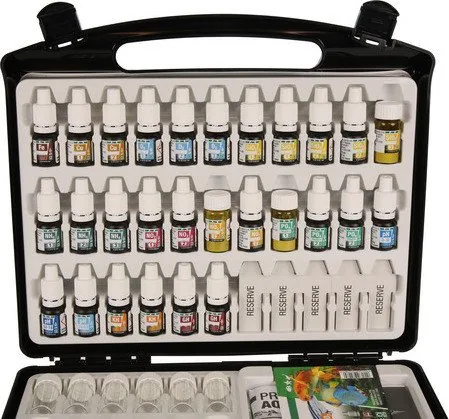
수질 검사 (pH (3 범위), 탄산염 경도, 총 경도, 인산염, 아질산염, 질산염, 철, 구리, 규산염, 산소, 암모늄, 암모니아, 이산화탄소 간접), 테스트 키트

치수

38.20x8.51x31.80cm (폭x높이x깊이)

무게

1.27 kg

M: QW-35-FL

제품 설명

수조 수질 화학 정복하기

건강한 수생 환경을 유지하려면 모든 수중 생물의 건강을 보장하기 위해 수질 화학을 정밀하게 모니터링해야 합니다. JBL Pro AquaTest Lab 테스트 케이스 매뉴얼 은 수조 설정에서 완벽함을 요구하는 애호가에게 필수적인 지침을 제공합니다. 이 포괄적인 컬렉션은 오늘날 사용되는 다양한 분석 방법에 대한 자세한 지침을 제공하여 물고기와 식물이 최적의 조건에서 번성하도록 보장합니다.

명확성을 위한 필수 테스트 방법

수질은 담수 해양 생물이든 정원 연못 코이든 특정 종을 키우는지 여부에 관계없이 수조 설정의 성공을 결정합니다. 안정성을 위해 다른 매개변수가 특정 주의를 필요로 합니다. 이 매뉴얼은 모든 사람을 위한 정확성과 사용 편의성을 위해 설계된 정교한 적정과 색상 측정 방법을 상세히 설명합니다. KH 및 GH 와 같은 적정 테스트는 시간이 지남에 따라 경도 수치를 효과적으로 결정하기 위해 정밀한 방울 수를 사용합니다. pH 및 필수 영양소 와 같은 색상 측정 테스트는 빠른 검사를 위해 명확하고 가독성 있는 결과를 위해 색상 차트에 의존합니다. 각 테스트에는 수질 샘플 테스트 프로세스 동안 사용자 오류를 최소화하기 위한 단계별 절차가 포함되어 있습니다. 이 시스템은 펄트 필터링 또는 처리로 인한 물 변색을 효과적으로 보상하여 어려운 조건에서도 신뢰성을 보장합니다.

건강을 위한 중요한 매개변수

수질 프로파일을 이해하는 것은 민감한 생물을 해치는 위험한 변동을 예방하는 데 중요합니다. Pro AQUATEST GH 및 KH 와 같은 경도 테스트는 민감한 생물을 현저히 해치는 위험한 pH 급변을 방지합니다. 특정 범위의 pH 수치는 산성 담수부터 알칼리성 해양 탱크까지 다양한 종에 완벽하게 적합합니다. 영양소 테스트는 정확히 시스템 기능을 추적하기 위해 암모늄 아질산염 및 질산염과 같은 복잡한 질소 순환을 모니터링합니다. 인산염 및 규산염 수치는 탱크를 질식시키고 물고기를 죽일 수 있는 끈적한 조류 번식을 예방하는 데 도움이 됩니다. 철 및 구리와 같은 미량 요소는 성장에 필수적이지만 독성 위험을 피하기 위해 엄격하게 제어해야 합니다. 산소 수준은 물고기와 박테리아에 대한 생명 지원을 보장하는 반면 CO2 비료는 심은 탱크에서 풍부한 식물 성장을 돕습니다.

안정성을 위한 유지보수 및 수정

장기적으로 생태계에서 스트레스와 질병 발생을 피하기 위해 매개변수를 안정적으로 유지하는 것이 중요합니다. 값이 권장 범위를 벗어나면 가이드는 문제 수정을 위한 조정용 특정 수정 단계를 제공합니다. 경도가 너무 낮으면 미네랄 염을 추가해야 하고 과다는 이를 줄이기 위해 역삼투 여과를 사용하는 것이 좋습니다. 영양 부족은 온라인에서 쉽게 구매할 수 있는 ProScape 범위의 특정 비료가 필요합니다. 고독성 수치는 신속하게 균형을 회복하기 위해 즉시 물변환 또는 생물학적 필터 도입이 필요합니다. 보관 지침은 시약이 만료되기 전에 향후 테스트 기간 동안 효과적으로 유지되도록 보장합니다. 디퍼는 시약 디스펜싱 중 공기 주머니를 방지하기 위해 수직으로 잡아야 합니다. 정기 모니터링은 탱크 유지보수 루틴에서 예상치 못한 놀라움을 방지합니다. JBL Pro AquaTest Lab 테스트 케이스 매뉴얼 지침을 준수함으로써 수조 소유자는 애완동물에게 수질 투명성과 안정성을 달성할 수 있습니다.

M: QW-35-FL

© Copyright 2026 Manual.ly